
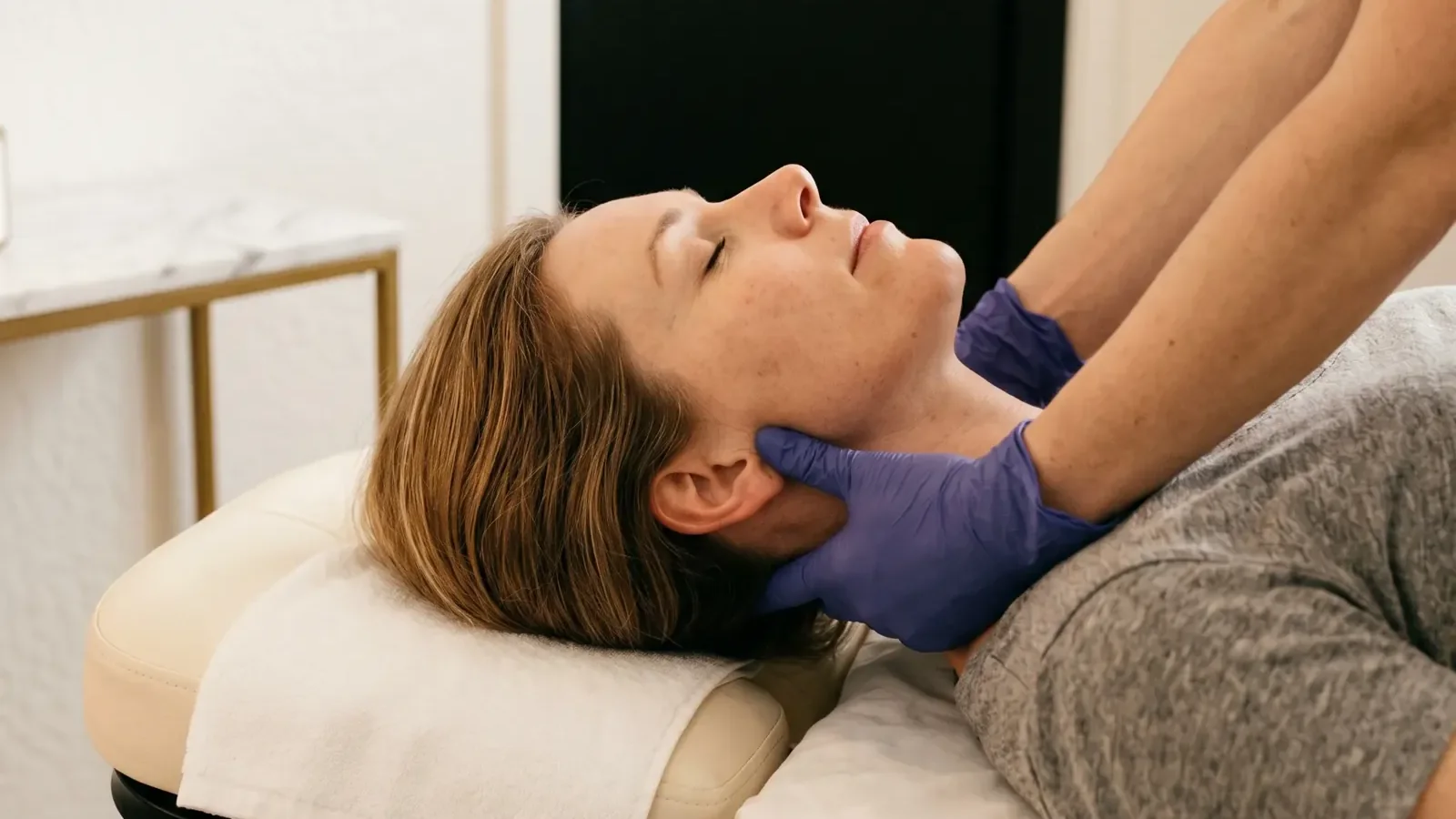


Chiropractor for Richmond Hill Patients
Essential Health Clinic is in Woodbridge, about 24 minutes from Yonge and Major Mackenzie. There is no Richmond Hill location, so patients drive west across the city line. Three chiropractors registered with the College of Chiropractors of Ontario practice here. Back pain, neck pain, headaches and sciatica are examined before they are treated.
4.9 Stars · 407 Reviews
Who provides chiropractic care for Richmond Hill patients?
Three Doctors of Chiropractic registered with the College of Chiropractors of Ontario provide the care: Dr. Becky Lancione, Dr. Marsha Black and Dr. Krystle Kreway. The office sits at 8099 Weston Road, Unit 28, in Woodbridge, inside the City of Vaughan. Each one runs their own examination before any technique is chosen.
Dr. Becky Lancione co-founded the clinic in 2016. A chiropractic adjustment is a controlled, specific force applied to a joint. The joint treated is one that has lost part of its normal range of movement. The adjustment is one method inside a larger set. Care here also covers hands-on soft-tissue work, taping and shockwave therapy. Which of those is used follows from the examination findings. Chiropractic also sits beside physiotherapy, massage therapy, osteopathy and psychotherapy in the same building.
How far is the clinic from Richmond Hill?
The drive is about 24 minutes from Yonge Street and Major Mackenzie Drive on a typical day. At 8:30 on a weekday morning the same trip takes about 29 minutes. From the Hillcrest area it is about 21 minutes. From Oak Ridges at peak it runs over 30 minutes.
Richmond Hill is its own municipality in York Region, and Vaughan is a separate municipality to the west. Woodbridge is the postal community inside Vaughan where the clinic sits. The trip crosses a city line, so the drive is the thing to plan around. An off-peak slot helps if you are coming from the north end of Richmond Hill. Patients also travel in from Thornhill, Maple and Kleinburg, which sit between the two. Free on-site parking is available at 8099 Weston Road, Unit 28, so you are not hunting for a space after the drive.
What does a first visit cost, and what should you bring?
A first visit is the 60-minute New Chiropractic Patient Exam at $160. The follow-up adjustment runs 15 minutes at $60. Most of that first hour is examination. Your chiropractor takes your history, tests range of motion, and checks the spine joint by joint. Nerve testing is added when symptoms travel into an arm or a leg.
Bring any imaging reports you already have. The examination reads them against how you actually move. Wear comfortable clothing you can move and bend in. If you are driving in from Richmond Hill, leave room for the trip so you are not rushed at intake. Nothing is adjusted until the examination is finished and the findings have been explained to you. A plan comes out of that conversation. Every other appointment length and fee is listed on the chiropractor cost page.
Do you treat car accident and work injuries?
We can assess and treat injuries after a car accident, including whiplash, as private care. We don't accept motor vehicle accident (MVA) or WSIB claims and don't bill auto insurers or WSIB. Care starts the way every other file starts, with the New Chiropractic Patient Exam.
Neck pain after a collision is assessed inside that examination. Whiplash is one of the neck presentations the testing looks at. Your chiropractor measures how far the neck moves and where in that range symptoms appear. Whether the arm is involved is checked at the same visit. Pain that followed significant force is screened first against the list in the physician-first section below. The findings set the plan, and the plan is reviewed as the testing changes.
What other disciplines are in the building?
Physiotherapy, registered massage therapy, osteopathy and psychotherapy all run from the same building. Ramandeep Singh, MScPT, delivers physiotherapy here. The registered massage therapy team works here too. A chiropractic examination sometimes points away from chiropractic, and the referral then happens inside the clinic, without a second trip from Richmond Hill.
When the examination finds a strength or control problem with no stiff joint behind it, physiotherapy takes the lead. When it finds long-standing muscle tension, registered massage therapy takes the lead. Your chiropractor says which one at intake, and those services carry their own fees. Osteopathy here is delivered by Dina Ibrahim, M.OMSc. Psychotherapy is delivered by Nicole Bonich, RP, who also offers virtual sessions. Each practitioner examines independently. The care is coordinated because everyone works in the same place.
How can I book around Richmond Hill traffic?
Two windows suit a Richmond Hill commute. Tuesday opens at 8:00, so an early slot puts you on Weston Road before the worst of the morning. Saturday opens at 8:00 as well, which avoids weekday commute traffic. Evenings run to 8:30 Monday through Thursday if a morning does not work.
Hours are Monday 9:00 to 8:30 and Tuesday 8:00 to 8:30. Wednesday and Thursday run 9:00 to 8:30. Friday is 9:00 to 8:00, and Saturday is 8:00 to 3:00. The clinic is closed Sunday. A 15-minute follow-up adjustment is short enough to pair with an early start, so the drive stays the longer part of the trip. Booking runs through essentialchirormt.janeapp.com, with live prices on screen. Reception answers at 905-856-2299 and will guide you to the right slot. Same-week appointments are typically available. Same-day chiropractic appointments can be arranged when a problem starts suddenly.
Do I need a referral, and will my insurance cover it?
No referral is needed. Chiropractors in Ontario are primary contact practitioners, so you can book directly. Coverage then depends on your plan. Direct billing is available to many major insurers as a courtesy; coverage depends on your plan. Where it applies, you pay the portion your plan leaves. Bring your insurer name and policy number to the first appointment.
Where direct billing applies, the claim is handled at the front desk on the day of the visit. One trip from Richmond Hill covers the appointment and the paperwork. Most workplace, student and extended health plans include chiropractic care. Your policy sets the per-visit limit and the annual maximum. Ask your plan what its chiropractic limit is before the first visit, so you know what it leaves you to pay. OHIP does not cover chiropractic care for most adults in Ontario, so the balance is paid privately. We don't accept motor vehicle accident (MVA) or WSIB claims and don't bill auto insurers or WSIB.
Which concerns does chiropractic care treat?
Chiropractic care here is used for low back pain, neck pain and stiffness, sciatica, headaches and migraines, and sports injuries. Each one is examined before it is treated. The examination decides the technique, and it also decides whether chiropractic should lead your case at all. Richmond Hill patients book the same first appointment for all five.
Two patients with the same complaint can leave with different plans, because the testing finds different things. One low back may have a stiff joint driving the pain. Another may have weak hip control with no joint restriction behind it. The first is chiropractic work. The second is physiotherapy work, and your chiropractor says so at intake. The five blocks below set out what the examination looks for in each case.
How does a chiropractor assess low back pain?
Your chiropractor starts with the history: when the pain began, which movement sets it off, and what you have already tried. Low back movement is then tested in each direction. Sitting, bending and lifting are each checked. The movement that brings on the pain narrows the source.
The spine is then checked by hand, joint by joint, so a joint that has lost part of its movement can be found. Nerve testing is added when pain travels into the leg. Reflexes, strength and sensation are checked at the same visit. Before any technique is chosen, your chiropractor screens for the symptoms listed in the physician-first section below. Pain that started after a fall is the common one in a low back case. The findings decide which technique is selected. Care often pairs a specific spinal adjustment with hands-on work on the muscle around that joint. Read how the clinic treats back pain.
How does a chiropractor assess neck pain and stiffness?
The examination measures how far the neck turns, bends and tips back, and where in that range your symptoms appear. Your history is taken first: when the stiffness started, what sets it off, and what you have tried. Each joint in the neck is then checked by hand for lost movement.
The muscles along the neck and upper back are checked for tension and tenderness. Reflexes, strength and sensation are tested when symptoms run into the arm or hand. Those results help separate a disc source from a joint, muscle or nerve source. Your chiropractor explains which structure the testing points at before treatment begins. The condition-specific check here is arm weakness that is getting worse, and the physician-first section below lists the rest. When the pattern does not fit a mechanical cause, you are referred to a physician. See neck pain and stiffness.
How does a chiropractor assess sciatica?
The examination tests the low back joints, the hip and the path of the sciatic nerve. Your history records where the pain starts and how far down the leg it runs. Positions that load the nerve are used next. They show what reproduces your pain and what settles it.
Leg strength, reflexes and sensation are checked after that, so the level of irritation can be mapped. Sciatic pain down one leg is a common presentation at the Woodbridge clinic, and disc-related pain is one of the patterns behind it. The condition-specific check in a sciatica case is bladder and bowel function. That sits on the list in the physician-first section below, and it calls for medical assessment before any manual treatment. When the examination finds it, your chiropractor says so and refers you. Otherwise the findings set the plan, and the plan is reviewed at each reassessment. See sciatica.
How does a chiropractor assess headaches and migraines?
The history comes first: when the headaches start, how long they last, what sets them off, and whether neck tightness tracks with them. Upper neck movement is then tested. Cervicogenic headaches come from the neck, and the examination tests for that pattern and does not assume it.
Neck tightness that tracks with the headache points at the upper neck joints, and each one is checked by hand. The muscles at the base of the skull are checked for tenderness and restriction. The condition-specific check here is a head impact followed by confusion, vision change or a worsening headache. That is assessed medically first, and the physician-first section below lists the other symptoms that come before treatment. All three chiropractors at the Woodbridge clinic treat headaches and migraines. Which one you see follows from what the examination finds.
How does a chiropractor assess a sports injury?
The examination records your sport, your weekly volume and any recent change in load. Pain onset, pattern and the movements that bring it on are mapped. Previous injuries to the same region are reviewed, because old tissue often explains current tightness. Joint movement is then tested one joint at a time.
Training loads the same joints thousands of times, and one joint can lose its share of movement. The muscle and fascia around a stiff joint are checked by hand. Fascia is the thin sheet of tissue that wraps muscle. Range is retested at follow-up visits, so the change is measured. The condition-specific check here is a joint that will not take weight, a suspected fracture or a complete rupture. Each needs imaging and a physician's opinion before manual treatment, and the physician-first section below covers the rest. Sports chiropractic covers that work in detail.
Related care.
- Long hours at a desk or on a phone load the neck and mid-back in one position, which the posture page covers.
- Children are seen through pediatric chiropractic, with age-appropriate assessment.
- Pregnancy care sits on the prenatal page.
- All of it sits under chiropractic care.
What happens at your appointment?
The visit opens with an examination and ends with a plan. In between, your chiropractor explains the findings, chooses technique from them, and tells you what to do between visits. Joint work and soft-tissue work happen in the same appointment, so one drive from Richmond Hill covers both.
Step 01. Assess. Your chiropractor takes a full history: when the pain started, what makes it worse, and what you have tried. The examination then covers posture, range of motion, joint-by-joint checks, and nerve screening when symptoms travel.
Step 02. Scope. Red flags are screened at intake, before technique is considered. The same examination separates a stiff joint from a strength or control problem, which decides whether chiropractic leads the plan.
Step 03. Why. You are told which structure is involved and what the testing showed. That conversation happens inside the first appointment.
Step 04. Method. Technique is matched to the findings. On the joint side the options are hands-on adjusting, the Thompson Drop Table, and instrument adjusting, which sends a measured force through a handheld device. On the soft-tissue side your chiropractor may use Graston Technique, a smooth metal tool drawn along the muscle, or Active Release Technique (ART), which holds pressure on a muscle while you move the limb through its range. NIMMO applies steady pressure to a tender point in a tight muscle. Cupping and shockwave therapy are available here as well.
Step 05. Guide. Kinesiology tape is a stretchy cotton tape applied across the treated area. It is used when you are staying active between visits. You also leave with loading guidance: what to train and what to reduce, based on that day's examination.
Step 06. Refer. When a case calls for more than one practitioner, the referral happens inside the building. Physiotherapy covers graded strength work and return-to-sport programming. Sports massage is hands-on muscle work from a registered massage therapist.
Results vary from person to person. After your first visit, your chiropractor will let you know whether follow-up care would be helpful and when to come back. We adjust the schedule based on how you're feeling, how you're moving, and what you want to get back to doing. You're always in charge of whether you continue care.
When should you see a physician first?
Some symptoms need medical assessment before any manual treatment. Go to a physician or emergency care for loss of bladder or bowel control. The same applies to numbness through the saddle area, meaning the part of you that would sit on a saddle. Weakness in a limb that is getting worse belongs there too.
Back pain with fever also calls for medical assessment. So does significant pain after a fall or a collision. A head impact followed by confusion, vision change or a worsening headache is assessed medically first. All of this is screened at the first visit, before any technique is selected. When the examination finds something outside chiropractic scope, your chiropractor says so directly and refers you. Chiropractic care also sits alongside primary medical care. Keep your family doctor for bloodwork, for prescriptions, and for the management of long-term medical conditions.
Who performs chiropractic care at the clinic?
Dr. Becky Lancione, Dr. Marsha Black and Dr. Krystle Kreway each perform chiropractic care here. Registration with the College of Chiropractors of Ontario is the legal requirement to practice chiropractic in this province, and all three hold it. Each one examines independently.
[Dr. Becky Lancione, DC, CACCP](/about/chiropractors). Chiropractor, Co-Founder. She has over 21 years in practice, co-founded the clinic in 2016, and is certified by the Academy Council of Chiropractic Pediatrics. She is also a Rock Tape Doctor and Movement Specialist, and is trained in PIPS Technique.
[Dr. Marsha Black, DC](/team/dr-marsha-black). Chiropractor. She has 31 years in practice and offers Functional Integrated Acupuncture alongside chiropractic adjusting.
[Dr. Krystle Kreway, DC](/about/chiropractors). Chiropractor. Ten years in practice. She uses Graston Technique and Active Release Technique. Cupping sits in the soft-tissue portion of a visit with her.
Care is coordinated when a case involves more than one discipline.
Ready to book your chiropractic appointment?
The first visit is an examination, and the plan comes from what that examination finds. Book the exam, hear what it found, and decide from there.
Related treatments
Treatments our practitioners commonly pair with Chiropractic Care, and the concerns they are chosen for.
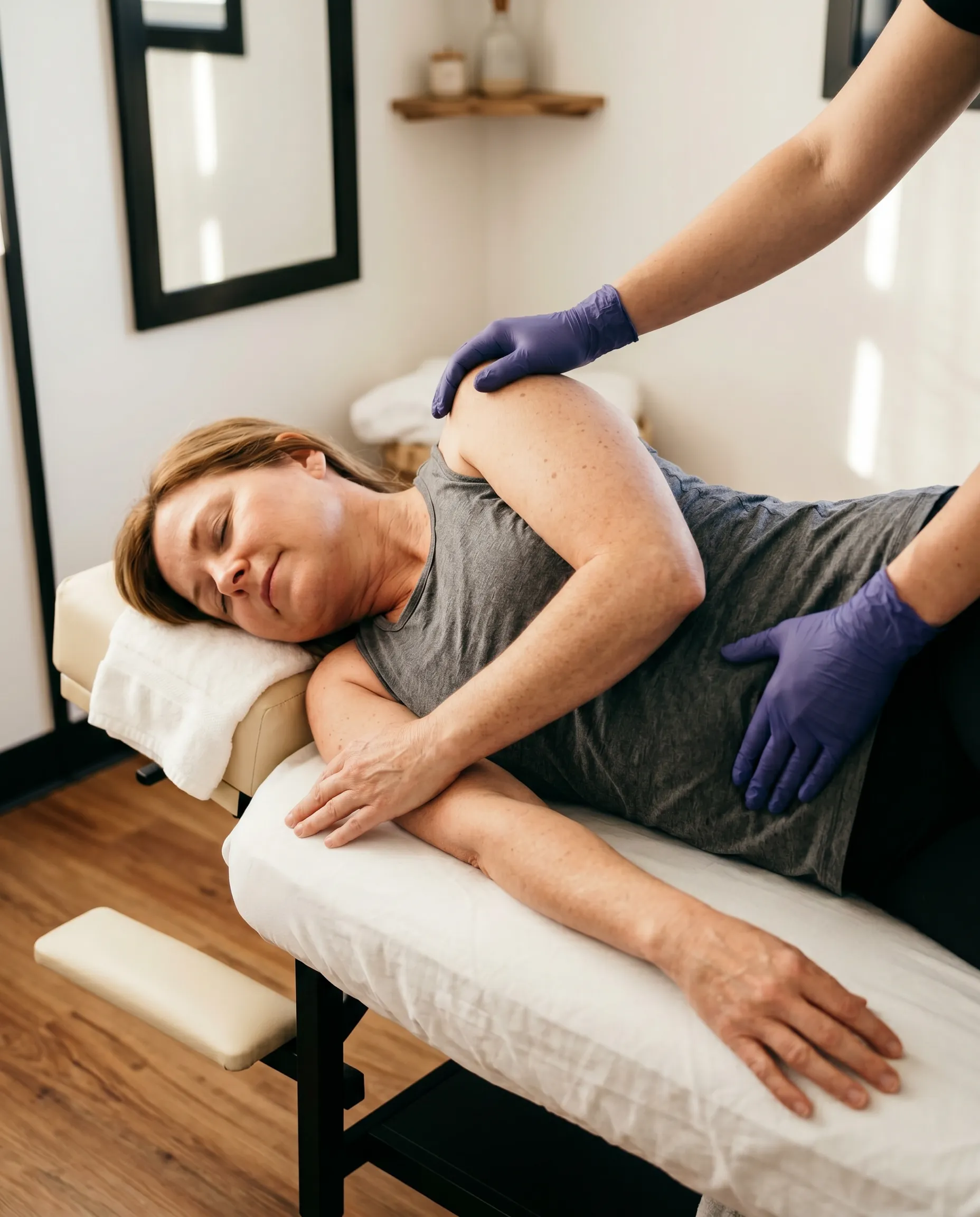
Chiropractic
Chiropractic Care
Spinal assessment and adjustment by three CCO-registered chiropractors. Diversified, Thompson Drop, Graston, ART, and more.
View Chiropractic CareChiropractic
Chiropractic Adjustment
A chiropractic adjustment is a controlled, specific force applied to a joint that has lost part of its normal range of movement.
View Chiropractic Adjustment
Chiropractic
Chiropractor Cost
A 15-minute chiropractic adjustment at Essential Health Clinic is $60.
View Chiropractor Cost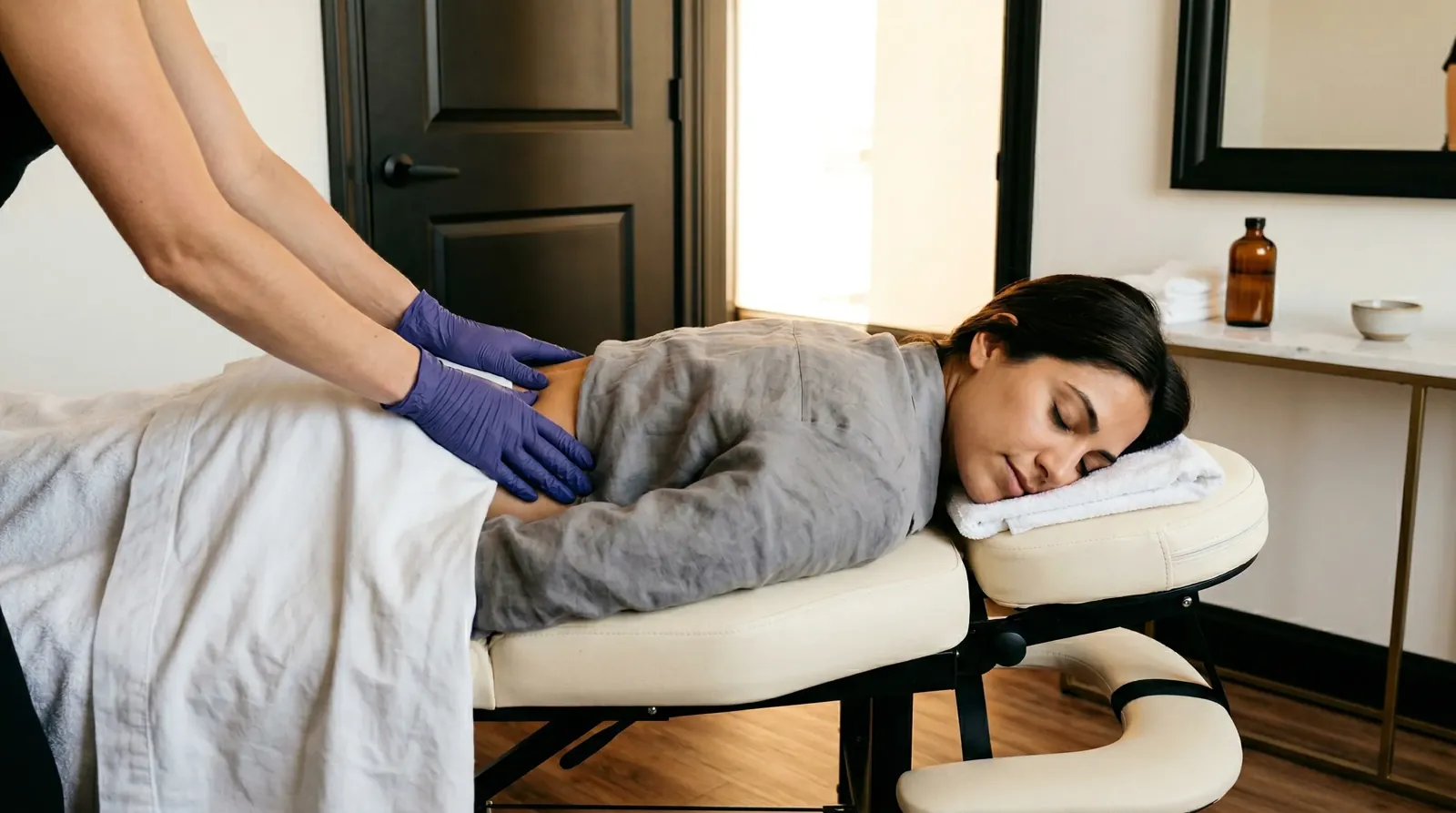
Chiropractic
Same-Day Chiropractor
Acute low back pain, a locked neck or a sciatic flare can be examined and treated on the day it starts.
View Same-Day Chiropractor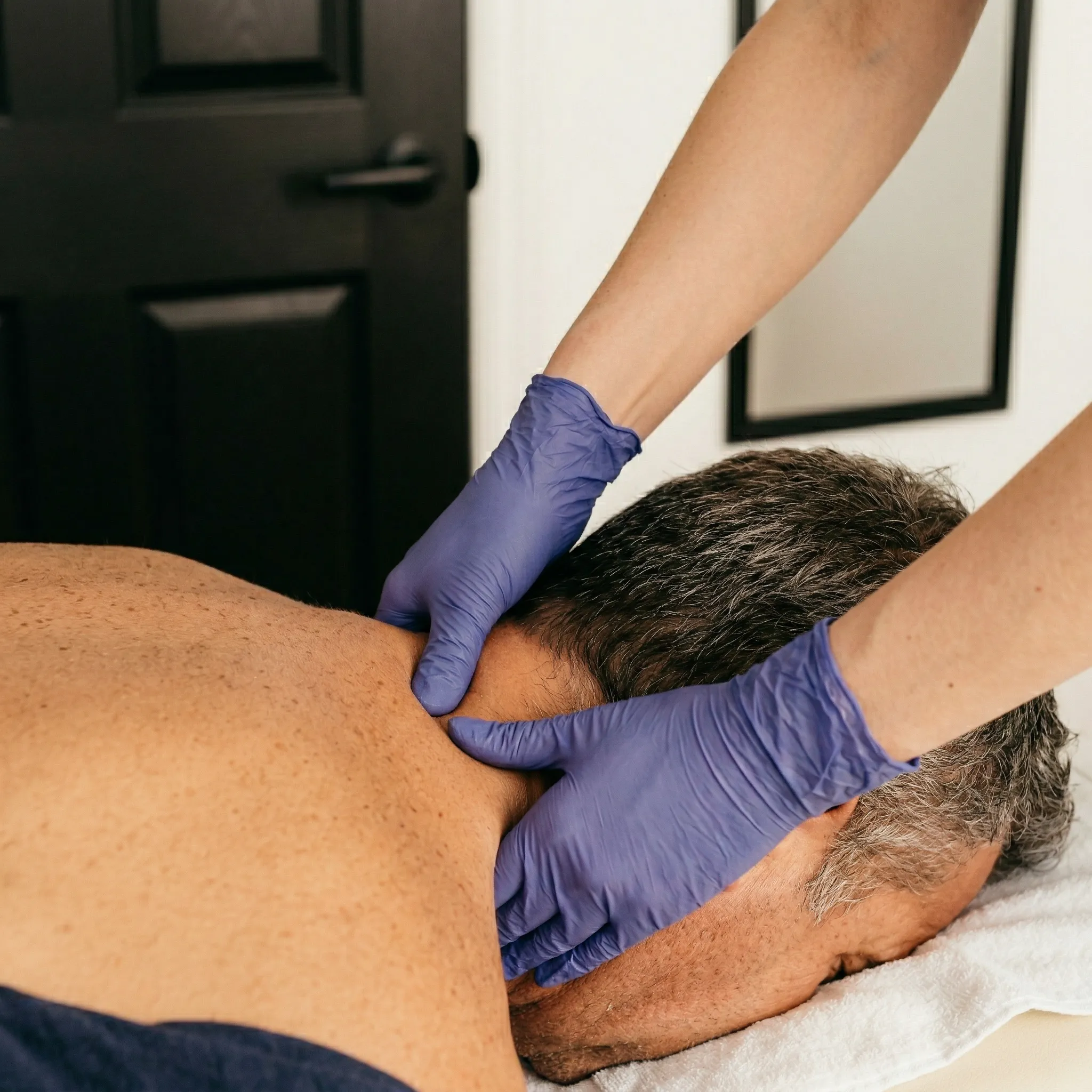
Physio & Rehab
Physiotherapy
Manual therapy, exercise prescription, and rehab by Ramandeep Singh, MScPT. Sports, orthopedic, and post-surgical recovery.
View Physiotherapy
Chiropractic
Pediatric Chiropractic
CACCP-certified care for infants, toddlers, and children. Gentle, low-force adjusting with age-appropriate assessment.
View Pediatric Chiropractic
Chiropractic
Chiropractic Acupuncture
Functional Integrated Acupuncture paired with chiropractic care for soft tissue restrictions and chronic pain.
View Chiropractic Acupuncture
Chiropractic
Sports Chiropractor
Training loads the same joints thousands of times, and when one segment loses its share of movement the tissue around it absorbs the extra work.
View Sports Chiropractor
Treating a specific concern? Read how we assess and treat back pain and neck pain and stiffness.
Not sure where to start?
Start with what you notice.
You do not need to know which discipline treats your concern. We figure that out on your first visit.
Conditions & Concerns

Pain & Injury
Back Pain
Tap to learn morePain & Injury
Back Pain
Rest helps for a day. Stretching helps for an hour. Four disciplines under one roof assess what is actually driving the pain.

Pain & Injury
Neck Pain & Stiffness
Tap to learn morePain & Injury
Neck Pain & Stiffness
Stiff in the morning, sore by midday. A cervical assessment identifies whether the source is disc, joint, muscle, or nerve before treatment begins.

Pain & Injury
Sciatica
Tap to learn morePain & Injury
Sciatica
Starts in your lower back. Burns down the back of your leg. Sciatica has a specific source, finding it is the first step.

Pain & Injury
Sports Injuries
Tap to learn morePain & Injury
Sports Injuries
Something gave during the game, or an ache built up over weeks. Accurate assessment first, then a plan to get you back to full activity.

Pain & Injury
Muscle Pain & Tension
Tap to learn morePain & Injury
Muscle Pain & Tension
Your shoulders are concrete by 3 PM. The knots never fully release. Tension that keeps returning has an underlying cause, assessment finds it.

Pain & Injury
Headaches & Migraines
Tap to learn morePain & Injury
Headaches & Migraines
Pressure behind your eyes every afternoon. The Advil takes the edge off. Recurring headaches are not something to manage with painkillers indefinitely.
Ready to book your chiropractic appointment?
Richmond Hill patients drive about 24 minutes for an exam that explains what is actually driving the pain, and the plan behind it comes from that exam rather than from a pre-purchased package. Book online anytime through Jane. No referral is required. Direct billing is available to many major insurers as a courtesy; coverage depends on your plan.
Chiropractic Care: Common Questions
Clinically reviewed by Dr. Becky Lancione, DC, CACCP.