
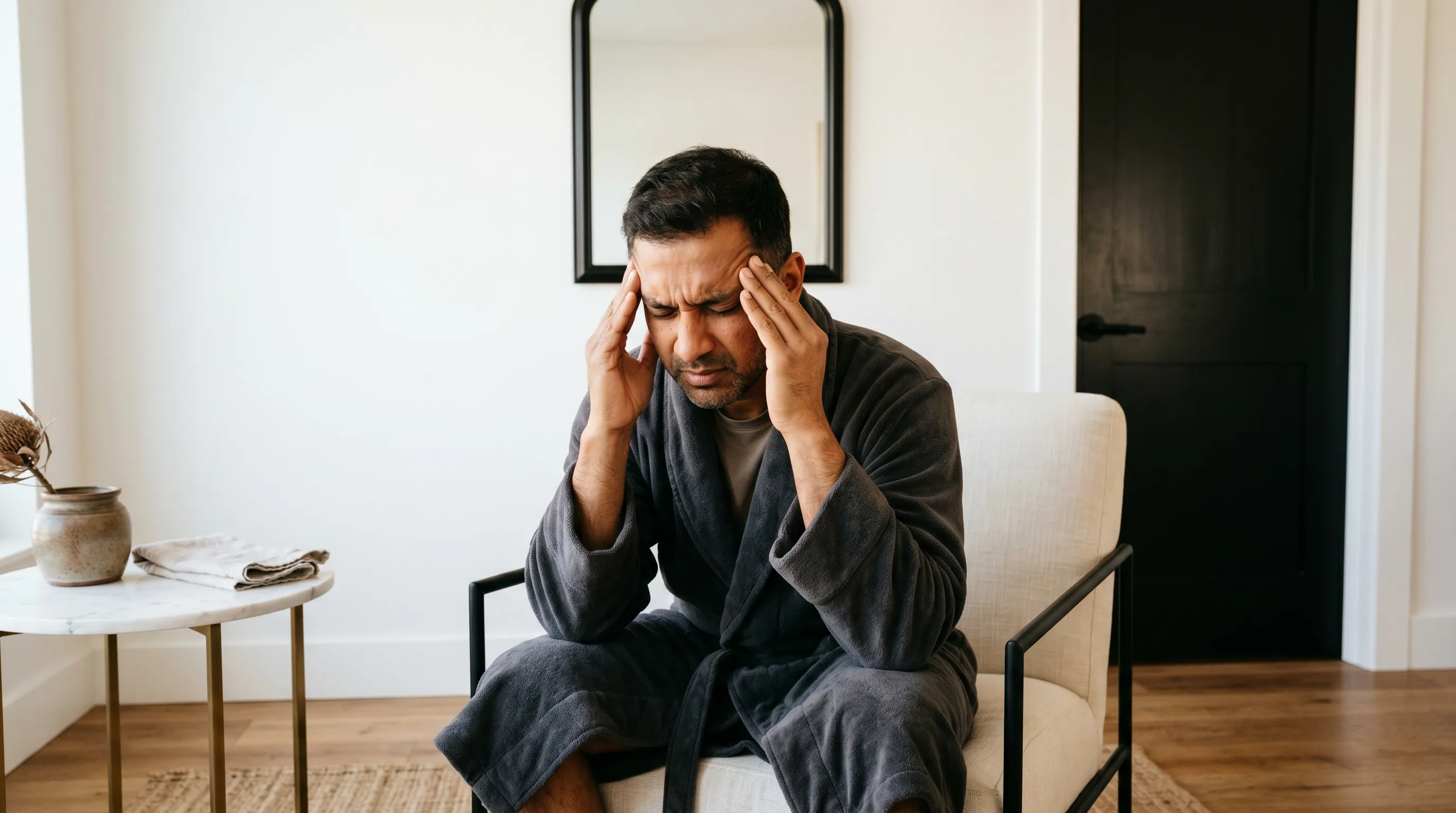
Headaches are one of the most common reasons people seek care, and they are not all the same. Tension headaches, migraines, and cervicogenic headaches have different causes, different symptoms, and different treatment approaches. Knowing which type you are dealing with is the first step to finding something that actually helps.
Tension Headaches: What They Feel Like
Tension headaches are the most common type of headache in adults. They are typically described as a dull, pressing, or squeezing pain that feels like a tight band or vice around the head. The pain is usually bilateral (both sides), affecting the forehead, temples, and the back of the head.
Tension headaches are generally mild to moderate in intensity. They do not typically cause nausea, vomiting, or sensitivity to light or sound (or these symptoms are mild when present). People with tension headaches can usually continue their normal activities, though with discomfort.
They last anywhere from 30 minutes to several hours, and in some people, they become chronic (occurring more than 15 days per month). Common triggers include stress, poor posture, dehydration, fatigue, and prolonged screen time or neck strain.
The muscular origin of tension headaches is key to understanding why they respond well to manual therapy. The pain is largely driven by tension and trigger points in the muscles of the neck, upper back, and scalp, particularly the suboccipital muscles at the base of the skull.
Migraines: A Distinct Neurological Condition
Migraines are a neurological condition, not simply a bad headache. The mechanism involves complex changes in brain chemistry and nerve activity that are not fully understood. They are significantly more intense and disabling than tension headaches.
Migraine pain is typically unilateral (one side of the head), pulsating or throbbing in character, and moderate to severe in intensity. Unlike tension headaches, migraines are often accompanied by nausea or vomiting, and significant sensitivity to light (photophobia) and sound (phonophobia). Physical activity worsens migraine pain, which is the opposite of tension headaches.
Migraines last from 4 to 72 hours if untreated. Some people experience a prodrome (warning phase with mood changes, yawning, or food cravings hours before the headache) and a postdrome ("migraine hangover" of fatigue and confusion after the pain resolves).
Approximately one-third of people with migraines experience aura: neurological symptoms that develop before or during the headache. Aura can include visual disturbances (flashing lights, blind spots, zigzag lines), tingling in the face or hands, or speech difficulties. Aura symptoms are temporary and resolve as the migraine progresses.
Key Differences Between Tension Headaches and Migraines
The following features help distinguish the two:
Location: Tension headaches are bilateral (both sides). Migraines are usually unilateral (one side), though not always.
Character: Tension headaches feel like pressure or squeezing. Migraines are pulsating or throbbing.
Intensity: Tension headaches are mild to moderate. Migraines are moderate to severe.
Nausea: Absent or mild in tension headaches. Commonly present in migraines.
Light and sound sensitivity: Mild or absent in tension headaches. Significant in migraines (patients often need to lie down in a dark, quiet room).
Effect of activity: Physical activity does not worsen tension headaches significantly. Activity worsens migraines.
Aura: Not present in tension headaches. Present in migraine with aura.
Duration: Tension headaches: 30 minutes to several hours. Migraines: 4 to 72 hours.
If you are unsure which type you experience, keeping a headache diary (noting location, character, intensity, associated symptoms, and triggers) for two to four weeks is one of the most useful things you can do before seeing a practitioner.
Cervicogenic Headaches: The Third Type
Cervicogenic headaches are often overlooked in the tension versus migraine discussion, but they are a distinct and clinically important category. "Cervicogenic" means originating from the cervical spine (neck). The pain is referred from structures in the upper neck, including the joints, muscles, and nerve roots, into the head.
Cervicogenic headaches are typically unilateral (one side), starting at the base of the skull or upper neck and radiating toward the forehead or eye on the same side. The headache is often triggered or worsened by neck movements or sustained neck postures (such as looking down at a phone or working at a desk).
On examination, there is usually restricted range of motion in the cervical spine, tenderness over the upper cervical joints (particularly C1–C3), and reproduction of headache symptoms with neck palpation or movement. This reproduction of the headache by neck palpation is a defining diagnostic feature.
Cervicogenic headaches are not a neurological condition. They are a musculoskeletal problem. This is why they respond specifically and well to manual therapy targeting the cervical spine, rather than migraine medication.
When Chiropractic Care Can Help
Chiropractic care has the strongest evidence base for cervicogenic headaches and also benefits many patients with tension headaches.
For cervicogenic headaches: cervical spine adjustment and mobilization targets the joints at C1–C3 that refer pain into the head. Restoring movement to these restricted joints often produces rapid reduction in headache frequency and intensity. This is one of the clearest treatment-to-mechanism matches in headache management.
For tension headaches: suboccipital and upper cervical adjustment can reduce the muscular and joint tension contributing to the headache pattern. Many patients find that chiropractic treatment significantly reduces the frequency of tension headaches when neck stiffness is a contributing factor.
For migraines: the evidence for chiropractic care for migraines is more limited. Some patients with migraines also have cervical spine involvement, and treating that component may reduce headache frequency. However, chiropractic is not a primary treatment for classic migraines without a cervicogenic component.
When Massage Therapy Can Help
Registered Massage Therapy is well-suited to tension headaches and can complement chiropractic care for cervicogenic headaches.
The suboccipital muscles (the small muscles at the base of the skull), the upper trapezius, sternocleidomastoid, and temporalis muscles are frequent contributors to tension and cervicogenic headaches. These muscles are accessible to manual treatment, and releasing trigger points and tension in these areas can directly reduce headache frequency and severity.
For patients whose headaches are primarily driven by muscle tension from desk work, stress, or poor posture, a course of RMT treatment targeting the neck and upper back muscles can produce meaningful and lasting improvement when combined with postural advice and self-care stretches.
RMT and chiropractic often work well in combination for headache presentations that involve both joint restriction and muscular tension.
When to See a Physician First
Most headaches are benign, but certain patterns require prompt medical evaluation before any manual therapy begins.
See a physician or go to an emergency department for:
A sudden, extremely severe headache that reaches peak intensity within seconds, sometimes described as "the worst headache of my life." This can indicate a serious vascular event including subarachnoid hemorrhage and requires emergency assessment.
A headache with fever, stiff neck, and photophobia. This combination may indicate meningitis.
Headaches associated with neurological symptoms such as sudden vision loss, weakness or numbness on one side of the face or body, or difficulty speaking. These can indicate stroke.
New onset severe headaches in someone over 50, or a significant change in existing headache patterns.
Headaches following a head injury.
Migraine with aura warrants a physician consultation, particularly if it is new or changing, or if you are a woman taking oral contraceptives (migraine with aura and oestrogen-containing contraceptives together increase stroke risk).
Frequent migraines (more than four per month) benefit from medical management, including preventive medication. This is a conversation with your physician, not a manual therapy consideration.
EHC's Approach to Headache Assessment
At Essential Health Clinic, headaches are assessed to determine the type and contributing factors before treatment begins. The assessment includes a detailed history (onset, frequency, duration, location, character, associated symptoms, triggers), a cervical spine examination, and postural assessment.
If the assessment suggests a cervicogenic or tension component, treatment is typically a combination of chiropractic and massage therapy, with home care advice on posture, ergonomics, and stretching.
If the presentation suggests migraine, or if there are any features that warrant further medical investigation, the practitioner will recommend a physician visit before proceeding.
Frequently Asked Questions
Can I have both tension headaches and migraines?
Yes. Many people experience more than one headache type. Some migraine patients also have frequent tension headaches between migraine episodes. A headache diary can help identify patterns and distinguish which type is occurring on a given day. This information is useful for both treatment planning and discussions with your physician.
How quickly does chiropractic care help with cervicogenic headaches?
Many patients with cervicogenic headaches notice improvement within the first two to four sessions. The response depends on how long the neck restriction has been present and the severity of the involvement. Your chiropractor will give you a clearer timeline after your initial assessment.
Are there specific exercises for tension headaches?
Yes. Suboccipital stretches, cervical retraction (chin tucks), and upper trapezius stretches are commonly recommended for tension headaches with a neck component. Deep neck flexor strengthening exercises can improve cervical stability over time. Your chiropractor or physiotherapist at EHC can prescribe a specific program based on your presentation.
What triggers should I avoid if I have migraines?
Common migraine triggers include disrupted sleep, dehydration, skipped meals, alcohol (particularly red wine), strong smells, bright or flickering lights, hormonal fluctuations, and stress. Keeping a headache diary helps identify your specific triggers. Not all triggers affect all migraine patients.
Does massage help during an active migraine?
Generally, massage during an active migraine is not recommended. Most migraine patients are sensitive to touch, sound, and light during an attack, and manual therapy tends to worsen symptoms at that time. Massage between attacks, as preventive care to reduce overall headache frequency, is where RMT is most useful for migraines.