
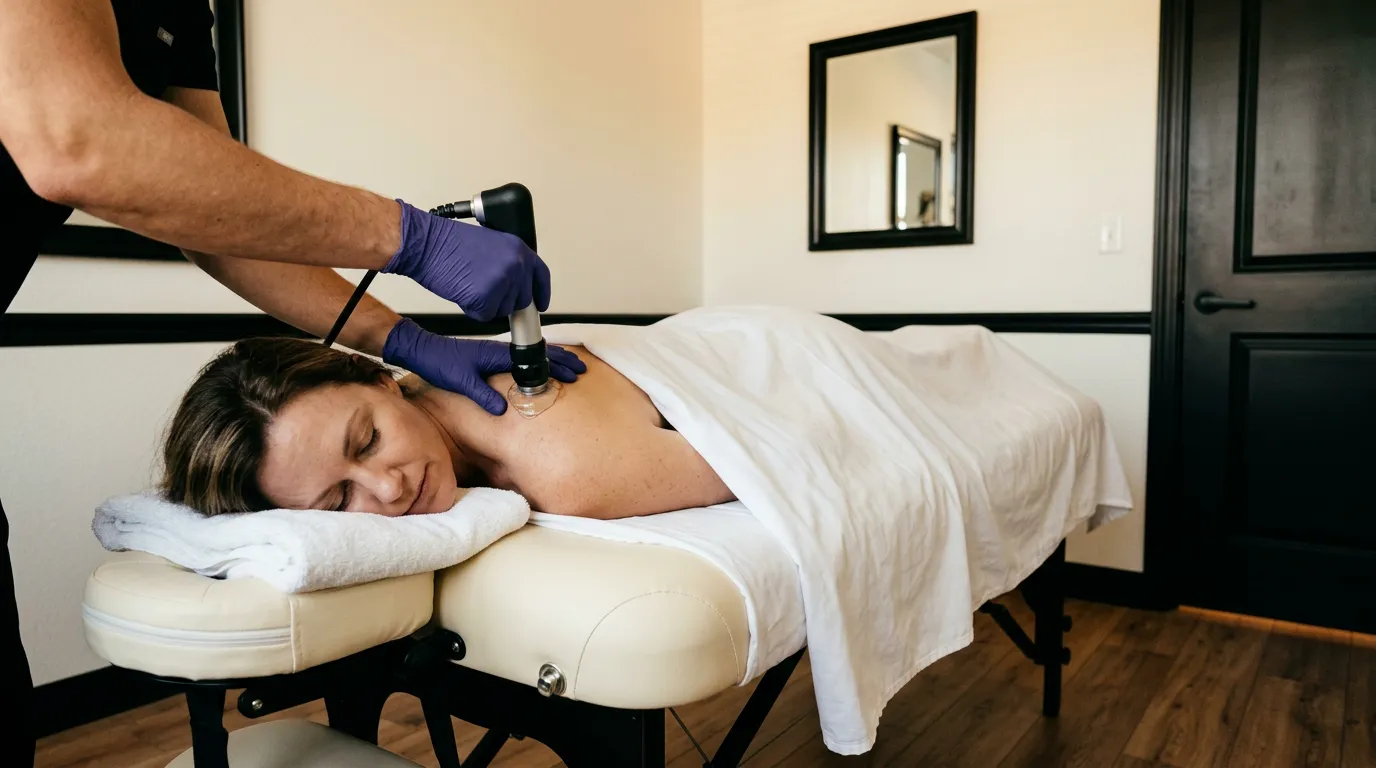
Your body heals injuries through inflammation. When you strain a muscle or irritate a tendon, inflammation swells the area, brings in healing cells, and builds new tissue. This process takes weeks. Most injuries heal within that window. But some injuries do not. The inflammation becomes chronic. Scar tissue forms. Collagen hardens. Blood flow to the area decreases. Pain persists because the tissue is no longer actively healing, it is trapped in a chronic inflammatory state. Standard treatment (rest, ice, massage, stretching) often cannot reset this state. Shockwave therapy is one option many patients explore at this stage, with the goal of re-initiating the healing response in tissue that has stalled. You can read more about how we use it on the [shockwave therapy page](/treatments/chiropractic/shockwave-therapy/) at Essential Health Clinic.
Frequently Asked Questions
Is shockwave therapy painful?
Mildly uncomfortable, not painful. You feel rhythmic pulses and pressure. Most patients tolerate it well without anesthesia. Topical anesthesia is available for sensitive areas. Soreness after treatment is mild and resolves within 24 to 48 hours.
How many sessions do I need?
Most patients need 4 to 6 sessions spaced one week apart. Some improve faster; others with severe, long-standing cases need 8 sessions. Your practitioner assesses at each session and adjusts the plan based on your progress.
Does shockwave therapy have downtime?
No downtime. You return to normal activity immediately. Avoid intense exercise or high-impact activity for 48 hours to allow initial healing. Light activity and walking are fine immediately after.
How does shockwave therapy compare to other treatments?
Shockwave therapy works on the underlying tissue (chronic inflammation and damaged collagen) rather than masking pain. It is non-invasive and has no downtime. Compared with corticosteroid injections, which tend to settle symptoms temporarily, shockwave aims to support tissue remodelling. It is one of the conservative care options patients explore before considering a surgical referral, which is part of why patients consider it earlier in a treatment plan.
When should I consider shockwave therapy?
After standard treatment (massage, physiotherapy, chiropractic care, rest) has plateaued or failed. If your pain persists after 4 to 6 weeks of appropriate conservative care, shockwave therapy is worth considering. Your practitioner assesses whether it is appropriate for your specific condition.
Does shockwave therapy work for everyone?
No treatment works for everyone. In clinical practice, shockwave therapy is well-tolerated and many patients with chronic soft tissue and tendon conditions respond well, with response varying by diagnosis, severity, and how long the problem has been present. Your practitioner discusses realistic expectations and what response would look like in your case before treatment begins.
Are results permanent?
Results are lasting, but plantar fasciitis, tendonitis, and other conditions recur if you return to the activities or habits that caused them. After shockwave therapy heals the tissue, a maintenance routine prevents recurrence: stretching, strengthening exercises, activity modification when needed. Most patients remain pain-free long-term with these practices.
What is the cost of shockwave therapy?
Shockwave therapy is not covered by most extended health benefit plans, so it is out-of-pocket. Costs vary by provider and condition. At Essential Health Clinic, we discuss costs and treatment planning during your assessment.