
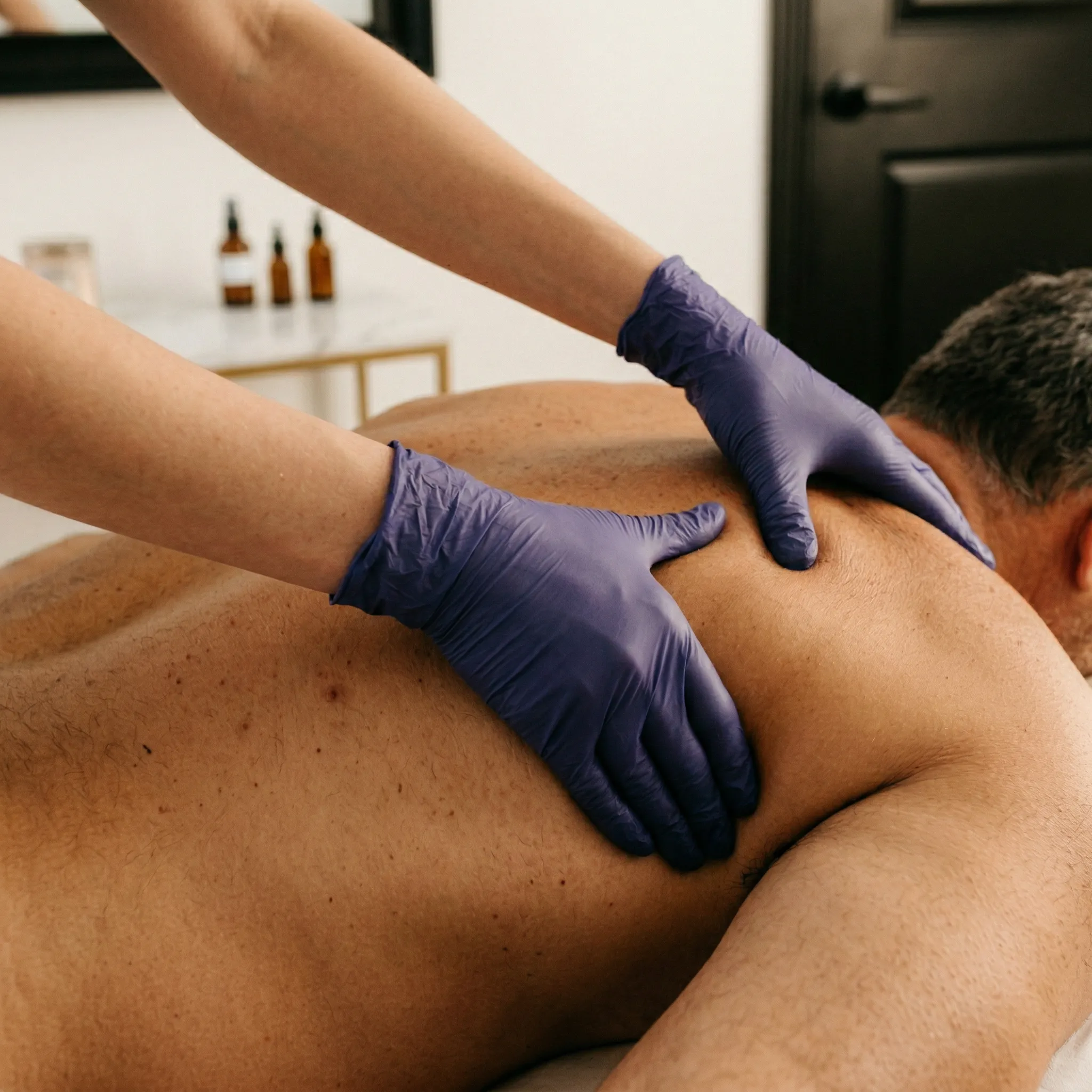
Not all massage is the same, and the difference matters more than many people realize. A Registered Massage Therapist (RMT) in Ontario is a regulated health professional with a specific scope of practice, clinical training, and accountability to a governing body. A relaxation massage at a spa may feel similar, but the training behind it, and what the practitioner is qualified to assess and treat, is fundamentally different.
What Is a Registered Massage Therapist?
In Ontario, the title "Registered Massage Therapist" is protected under the Massage Therapy Act, 1991. RMTs are regulated by the College of Massage Therapists of Ontario (CMTO). To hold the title, a practitioner must complete an approved massage therapy education program (typically 2,200 hours of in-class and clinical training), pass a two-part registration examination, and maintain continuing education requirements to remain in good standing.
The training is considerably more rigorous than most people assume. It covers anatomy and physiology, pathology, orthopedic assessment, clinical reasoning, and supervised clinical practice hours. An RMT is trained to assess the musculoskeletal system, identify contraindications, adapt treatment to health conditions, and provide therapeutic care for a range of clinical presentations.
This is a meaningful difference from a personal trainer who took a weekend course in massage or a spa aesthetician who includes massage in their service menu.
Clinical Training vs Spa Training
The educational gap between an RMT and an unregulated massage practitioner is significant.
An RMT program covers: anatomy and physiology at a depth equivalent to other regulated health professions, orthopedic and postural assessment techniques, pathology (how diseases and injuries affect the body and how they contraindicate or modify treatment), clinical decision-making and patient communication, and supervised clinical hours with real patients in a variety of presentations.
Spa massage training, particularly short certification programs, focuses primarily on relaxation techniques, draping protocols, and basic Swedish massage sequences. The practitioner learns to deliver a pleasant, safe experience. They are not trained to assess the musculoskeletal system, identify pathology, or provide treatment for clinical presentations.
Neither type of training is "wrong" for its intended purpose. A relaxation massage done by a trained spa aesthetician is appropriate for stress relief and general wellness. But calling it the equivalent of RMT clinical care is not accurate.
What an RMT Can Assess and Treat
RMTs in Ontario have a defined scope of practice that goes well beyond relaxation.
Assessment: RMTs perform orthopedic assessment to identify the source of musculoskeletal pain or restriction. This includes range of motion testing, muscle length testing, postural assessment, and special orthopedic tests. The assessment determines what is causing the problem and guides treatment.
Treatment: RMTs use a range of clinical techniques based on their assessment findings. These include deep tissue massage, myofascial release, trigger point therapy, joint mobilization, hydrotherapy, and neuromuscular techniques. Treatment is adapted to the patient's presentation, not delivered as a standardized routine.
Conditions RMTs treat: acute and chronic muscle and joint pain, tension headaches and cervicogenic headaches, post-injury rehabilitation, whiplash, tendinopathy, plantar fasciitis, nerve-related conditions (thoracic outlet syndrome, carpal tunnel), post-surgical rehabilitation, prenatal and postnatal care, and lymphatic drainage for post-surgical or medical conditions.
When an RMT Is the Right Choice
Choose an RMT when your reason for seeking massage is connected to a health concern, injury, or clinical goal.
After an injury: Whether from a car accident, sport, workplace, or daily activity, an RMT can assess what structures are involved and provide targeted treatment to support recovery. This is a significantly different approach from a relaxation massage that avoids "problem areas."
Chronic pain management: Persistent muscle tension, recurring back or neck pain, and pain patterns that have not resolved with rest benefit from clinical assessment and targeted treatment. An RMT can identify contributing factors that a relaxation therapist would not assess.
Prenatal massage: Pregnancy changes how the body functions and introduces contraindications. RMTs are trained in prenatal positioning, draping, and the specific adaptations required for safe therapeutic massage during pregnancy. This is not the same as simply doing a gentle relaxation massage on a pregnant client.
Lymphatic drainage: Manual lymphatic drainage (MLD), including post-surgical Brazilian lymphatic drainage, requires specific training and clinical knowledge about contraindications. At EHC, this service is provided by RMTs trained in post-surgical lymphatic techniques.
Insurance receipts: If your extended health benefit plan covers massage therapy, it almost certainly requires receipts from a Registered Massage Therapist registered with the CMTO. Receipts from an unregulated practitioner will not be accepted, regardless of what they call themselves.
What You Lose with Unregulated Massage
Beyond the clinical training difference, there are several practical protections that come with an RMT that do not exist with an unregulated practitioner.
Accountability: RMTs are accountable to the CMTO. If a patient experiences harm or has a complaint, there is a formal complaints process. An unregulated practitioner has no equivalent accountability structure.
Clinical reasoning: If something in your presentation is a contraindication to massage (recent surgery, acute inflammation, blood clots, certain medications), an RMT is trained to identify it. An unregulated practitioner may not know what to look for.
Insurance coverage: Extended health plans that cover registered massage therapy specifically require CMTO registration. Receipts from unregulated providers are not covered.
Scope awareness: An RMT knows the limits of what massage can and cannot treat, and will refer you to another practitioner when appropriate. They do not work in isolation.
None of this means a relaxation massage has no value. For stress relief, general wellness, and a pleasant experience, a spa massage can be appropriate. For clinical care, the difference matters.
EHC's six RMTs: Clinical Massage in Vaughan
Essential Health Clinic has seven Registered Massage Therapists on staff. This depth of RMT coverage means patients in Vaughan and the broader Vaughan area have access to appointments without long waits, and the ability to match their specific needs to a therapist with the right specialization.
The RMT team at EHC provides: deep tissue and therapeutic massage for musculoskeletal pain, prenatal massage, post-surgical lymphatic drainage (including Brazilian lymphatic drainage with Crystal Tait), relaxation massage when a wellness focus is the goal, and coordination with the clinic's chiropractors, physiotherapists, and osteopathic practitioners for patients receiving multi-disciplinary care.
All RMT sessions at EHC are billable to most extended health benefit plans that include massage therapy coverage. Bring your insurance information and your RMT will provide a detailed receipt for submission.
Frequently Asked Questions
How do I know if my insurance covers RMT visits?
Check your extended health benefit booklet or provider portal for "massage therapy" coverage. Most group benefit plans (through employers) in Ontario include RMT coverage with an annual maximum. The receipt must be from a CMTO-registered RMT to be accepted. EHC RMTs can provide receipts for insurance submission.
Do I need a physician referral to see an RMT in Ontario?
No. RMTs are primary contact practitioners in Ontario. You can book directly without a referral. Some insurance plans may ask for a referral to approve claims, but this varies by plan. Check your specific benefit terms.
How long are RMT sessions?
RMT sessions at EHC are available in 30, 45, 60, and 90-minute formats. For clinical presentations (injury, chronic pain, post-surgical care), 60 minutes is usually the minimum to allow adequate assessment and treatment. For maintenance or relaxation, shorter sessions may be appropriate.
Can an RMT help with stress and anxiety?
Yes. Massage therapy has well-documented effects on the nervous system, including reducing cortisol levels, activating the parasympathetic nervous system, and improving sleep quality. An RMT can provide care that is simultaneously clinically therapeutic and deeply relaxing. You do not have to choose between the two.
How is an RMT different from a physiotherapist when it comes to soft tissue work?
Both professions work with soft tissue, but their primary training focus and scope differ. A physiotherapist's training centres on movement assessment, rehabilitation, and exercise prescription. An RMT's training centres on manual therapy applied to muscle, fascia, and connective tissue. In practice, both may use hands-on techniques. For pure soft tissue treatment, an RMT often provides longer and more focused manual work per session. For rehabilitation with exercise prescription, a physiotherapist's scope is broader.