
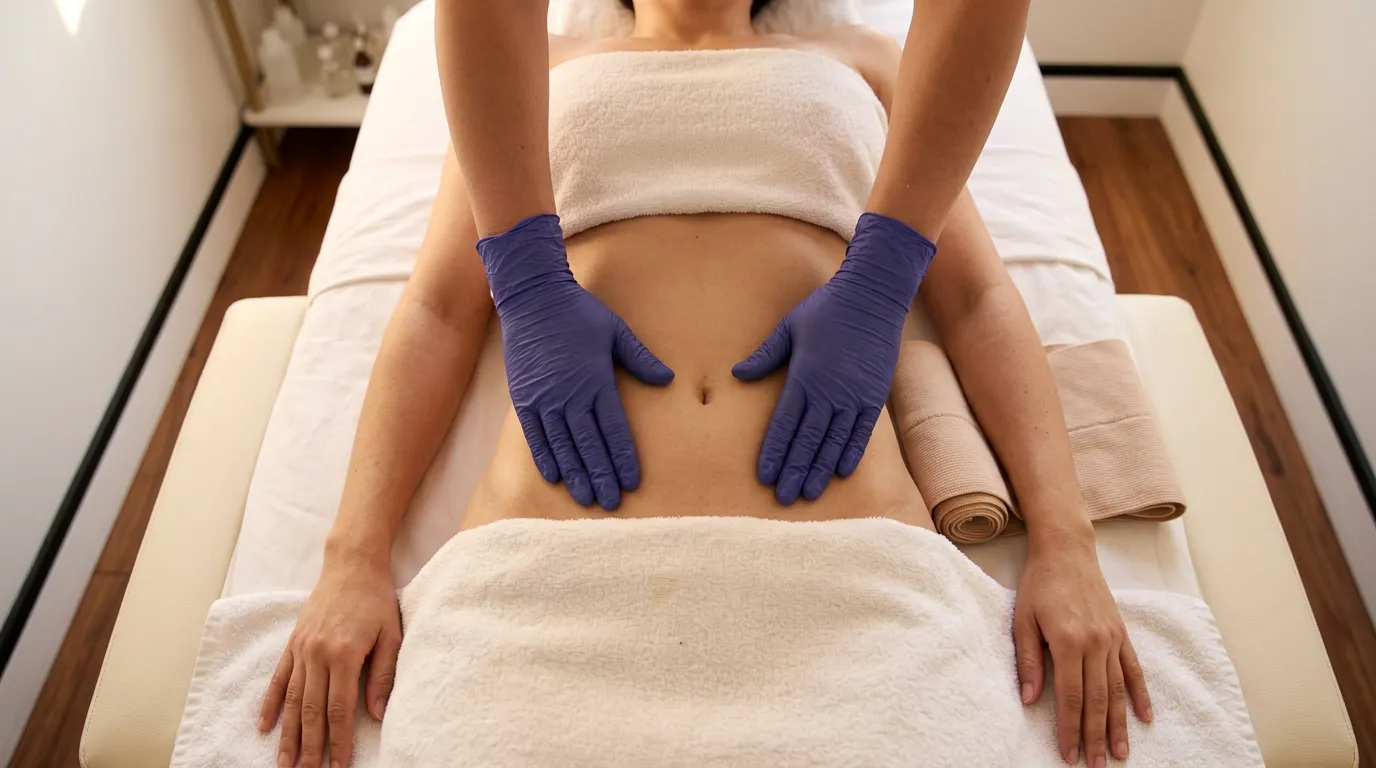


Fibrosis Massage After Surgery
Fibrosis massage is hands-on lymphatic and soft tissue work for firm, lumpy areas that form after surgery. At Essential Health, post-surgical fibrosis work is Crystal Tait's, through the LINFA Post-Surgical Recovery session: gentle drainage first, then hands-on fascial and myofascial work as healing allows. Sessions begin once your surgeon clears you. No referral is needed to book at our Woodbridge clinic.
4.9 Stars · 407 Reviews
What is fibrosis after surgery?
Fibrosis is tough connective tissue that forms in an area after surgery. It feels firm or lumpy under the skin. The surface can look uneven. One side can feel denser than the other, and the area is often tender.
Surgery cuts lymphatic vessels, so fluid collects around the surgical site. During healing, the body also lays down collagen to repair the tissue. Collagen is the protein the body uses to build scar tissue. That is why firmness can show up weeks after surgery. Tissue can feel firm, lumpy, thick, or pulling.
Firm patches can appear in the treated area in the weeks after liposuction, a BBL, or a tummy tuck. Tell your surgeon or Crystal when you notice it. Early sessions work on swelling and fluid buildup, and on easing tightness and cording. As you heal, treatment progresses to scar tissue, firmness and fibrosis, and to restoring tissue mobility and range of motion.
How is tissue that has set firm worked on?
At Essential Health, post-surgical fibrosis work is Crystal Tait's, through the LINFA Post-Surgical Recovery session: gentle drainage first, then hands-on fascial and myofascial work as healing allows. Gentle drainage comes first: light, directional strokes move fluid out of the area along the lymph pathways that are still intact. Then, as healing allows, Crystal works the firm tissue by hand with fascial and myofascial techniques. Myofascial work is sustained pressure into the connective tissue around muscle, used to restore tissue glide. Fascia is the connective tissue that wraps your muscles.
Pressure starts gentle and is adjusted to your stage of healing, how swollen you are that day, and your surgeon's written instructions. It should not hurt. How close an area sits to an incision also sets the pressure. If a stroke crosses into pain, Crystal eases off or changes technique.
Hands-on fascial work on dense areas comes later, as healing allows and once the tissue has shown how it is responding. The strokes stay slow. Each area is worked for a short stretch, then rechecked by hand as the session runs. Tissue around a firm spot gets worked too, because restriction there can hold the pattern in place.
Massage does not dissolve or break up fibrosis. The aim is to move fluid and to change how the tissue moves. Results vary. A 2026 systematic review in Plastic and Reconstructive Surgery Global Open found moderate benefit for swelling after cosmetic surgery, with inconsistent effects on pain and fibrosis, and more research is needed.
Which concerns does fibrosis massage treat?
Firm tissue after surgery is the reason patients book this service: after liposuction, tummy tuck, BBL and other body contouring, and after hip and knee replacements, orthopedic and sports surgery, hysterectomy and abdominal surgery, and breast surgery. Sessions address swelling and fluid buildup first, then the firmness itself as healing allows.
The LINFA Method combines gentle lymphatic drainage, fascial work, and nervous system regulation. Each session is built around your procedure and your stage of recovery, alongside your surgeon's care. Early visits stay light and focus on moving fluid. Later visits can add hands-on fascial work on the dense areas, as healing allows.
What changes from one procedure to another?
The surgical plan sets the limits, so pressure and positioning differ by procedure. After liposuction, firm ridges or dense pockets can form in the flanks, the abdomen, or the thighs. Those areas are worked gently first, paced to your stage of healing.
After a BBL or a tummy tuck, positioning follows the limits set in your post-operative instructions. Strokes stay off the incision line, and the tissue around it is cleared instead. Areas close to an incision are handled with more care than areas in the middle of the treated zone.
Dense areas and swollen areas can need different handling in the same hour. For the broader plan, see lymphatic massage after liposuction.
How does the appointment work?
The first visit opens with a review of your health history, your surgical paperwork, and your medications. Clearance for manual therapy is confirmed before any hands-on work begins. Crystal then maps the firm areas by touch. Light drainage comes first, and deeper work follows only once fluid has moved.
The LINFA post-surgical session runs 75 minutes. Consent for the treatment region is taken before the hands-on portion begins. Crystal works across the treated zone by hand and notes what each area shows. She reads texture, how deep the firmness sits, and how close it is to the incision.
Those three things set the pressure and the order of the session. The intake, the drainage sequence, the garment, and the care cadence follow the same structure as our post-surgery lymphatic drainage service. That page covers them in full.
How long does firm tissue take to change?
Firm tissue usually takes longer to change than swelling does. How often you come depends on your surgery and how you're healing. Your therapist will recommend a schedule that fits you. Results vary. No one can give you a fixed date for when an area will change.
The American Society of Plastic Surgeons says swelling should start to subside at weeks four to five after liposuction. The 2026 review delivered drainage in 6 to 12 sessions. Early visits are more frequent and taper as swelling settles.
Crystal reassesses the firm areas at each appointment. The schedule is reshaped around what the tissue is doing. If an area is not changing, the plan changes: wider spacing, a different technique, or work on the surrounding fascia. A trip back to your surgeon can also be the right next step.
We don't use therapeutic ultrasound. Firm tissue is worked by hand. Device-based treatments are a question for your surgeon. Walking and movement follow your surgeon's instructions.
When is fibrosis massage not the right first call?
Call your surgeon first for anything that looks like a new problem. That includes firm or lumpy tissue that is new, painful, red, or warm. It also includes signs of infection near an incision, calf swelling with redness or warmth, and sudden severe pain. Massage therapy waits until your surgeon has looked.
Sessions begin once your surgeon clears you. Crystal works from the written instructions you are given. If something in your history needs medical review first, you will be told that at the visit, and the session waits.
Some cases fit a sibling service better. Broader post-surgical recovery is covered on post-surgery lymphatic drainage. Fluid retention with fascial restriction often suits the LINFA Method. Crystal will tell you at the visit if another service here suits you better.
What about the compression garment?
Garment wear and fit follow your surgeon's instructions. The American Society of Plastic Surgeons gives guidance on this. After liposuction, you will need to wear an elastic bandage, support bra or a compression garment to minimize swelling. The same guidance adds that following your physician's instructions is key to the success of your surgery.
Your garment is removed for the session and put back on before you leave, so please bring yours. Getting it on correctly is part of the appointment, so the visit allows time for it. Compression and hands-on work are two parts of the same recovery plan.
If the garment feels wrong, or you are unsure how long to wear it, those are questions for your surgeon. What your surgeon has already told you takes priority over anything else you read.
Can I do fibrosis massage at home?
No home technique is given on this page. The right answer depends on your procedure, your incisions, and your stage of healing, so it has to come from the people who know your case. Ask your surgeon what is safe for you to do at home. Raise it with Crystal at your session as well. Anything you try at home should sit inside your surgeon's plan. If both of them advise a technique, follow what they showed you.
Who performs the treatment?
Crystal Tait, RMT, has completed all four levels of lymphatic training through Toronto Lymphatic Academy (2026): Foundation MLD, Functional Lymphatics, Peri-op and Fascial Care, and Glymphatics. She is the clinic's only therapist who has completed every level. She holds a Structural Integration certificate, practises fascial therapy, and is trained in Brazilian lymphatic drainage. RMT since 2003. Post-surgical fibrosis work at Essential Health is hers alone, through the LINFA Post-Surgical Recovery session. Her fascial and structural integration background matters in fibrosis work, where the firm tissue and the restriction around it are one problem.
Crystal keeps a record of what was worked and how the tissue felt. The next session starts from where the last one left off, so the plan builds instead of resetting.
Care is coordinated with the other disciplines in the building when the assessment finds more than one driver. Chiropractic, physiotherapy, osteopathy, and psychotherapy all run out of the same Weston Road location. That matters when firm tissue sits alongside pain or restricted movement.
What does fibrosis massage cost?
The LINFA Lymphatic Drainage Post-Surgical Recovery session is 75 minutes, $240. Direct billing is available to many major insurers as a courtesy; coverage depends on your plan.
The work is delivered by a registered massage therapist and billed as registered massage therapy.
Coverage amounts differ by plan, so check the massage therapy limit on yours before a series starts. Visits are booked online through Jane or by phone at 905-856-2299. The checklist of what to bring is in the next section.
What do you need before you book?
Before your first visit: You must have clearance from your surgeon. Tell the clinic your surgery date and the procedure you had. You can book with surgical drains in, with your surgeon's clearance. Your therapist works around drain sites, never over them. Please mention drains when booking. Your garment is removed for the session and put back on before you leave, so please bring yours.
Book the LINFA Post-Surgical Recovery session directly with Crystal on Jane, or call 905-856-2299, and put those details in the booking notes. Bring your written post-operative instructions to the first appointment. Crystal reads them before any hands-on work begins.
Parking is free and on site at 8099 Weston Road, Unit 28 in Woodbridge.
Ready to book fibrosis massage?
Firm, lumpy tissue after surgery has a service here, delivered by Crystal Tait, RMT. Your first visit starts with an assessment by hand, and you leave with a plan built around your surgeon's instructions.
Related treatments
Treatments our practitioners commonly pair with Fibrosis Massage After Surgery, and the concerns they are chosen for.

Lymphatic Drainage
Post-Surgery Lymphatic Drainage
Post-surgical care with Crystal Tait, RMT. Sessions begin once your surgeon clears you.
View Post-Surgery Lymphatic Drainage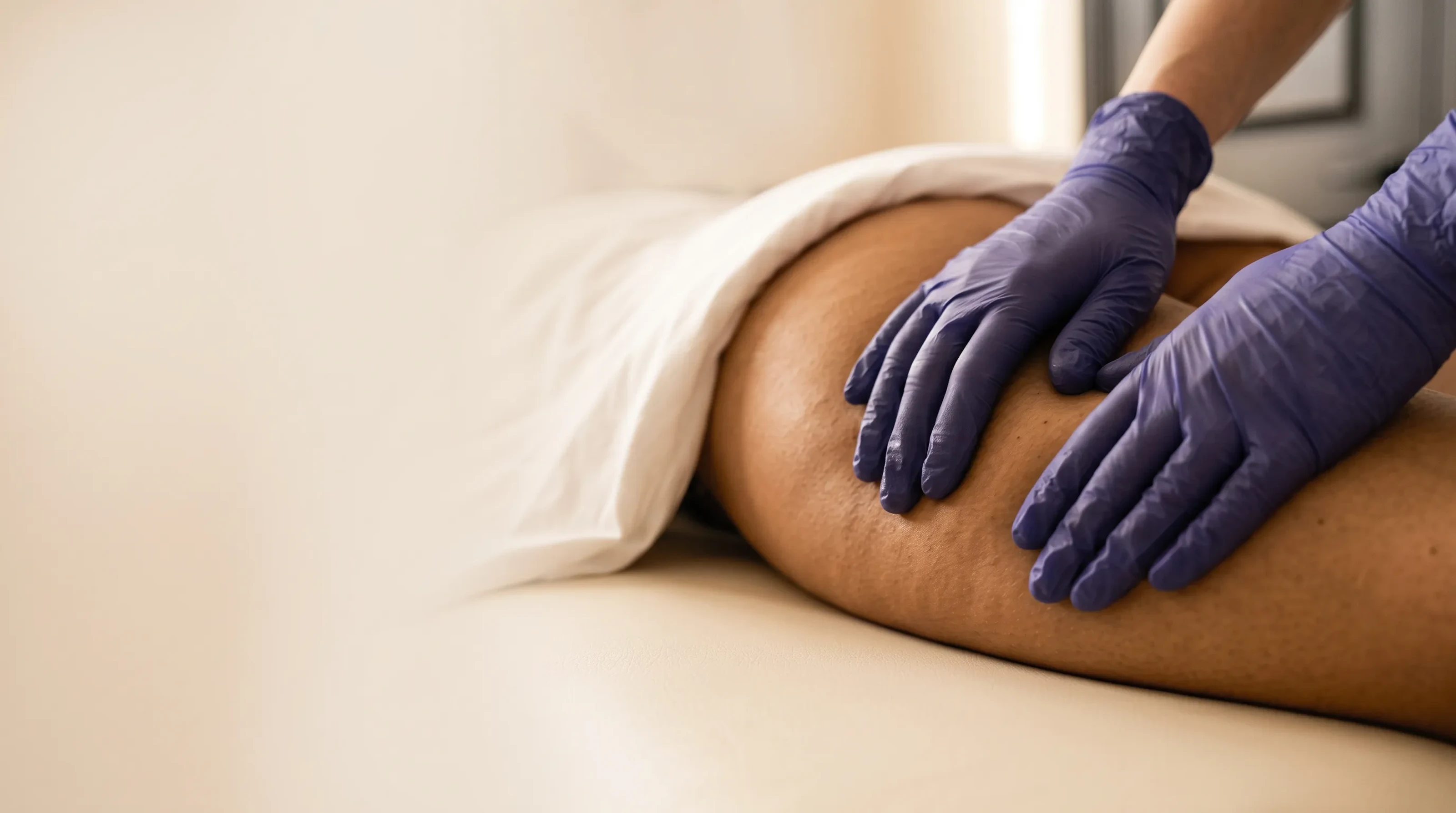
Lymphatic Drainage
Lymphatic Massage After Lipo
Post-surgical care with Crystal Tait, RMT, after liposuction, BBL and tummy tuck. Pressure starts gentle and follows your stage of healing.
View Lymphatic Massage After Lipo
Lymphatic Drainage
Brazilian Lymphatic Drainage
Firm, rhythmic drainage for body contouring. Not a post-surgical treatment.
View Brazilian Lymphatic Drainage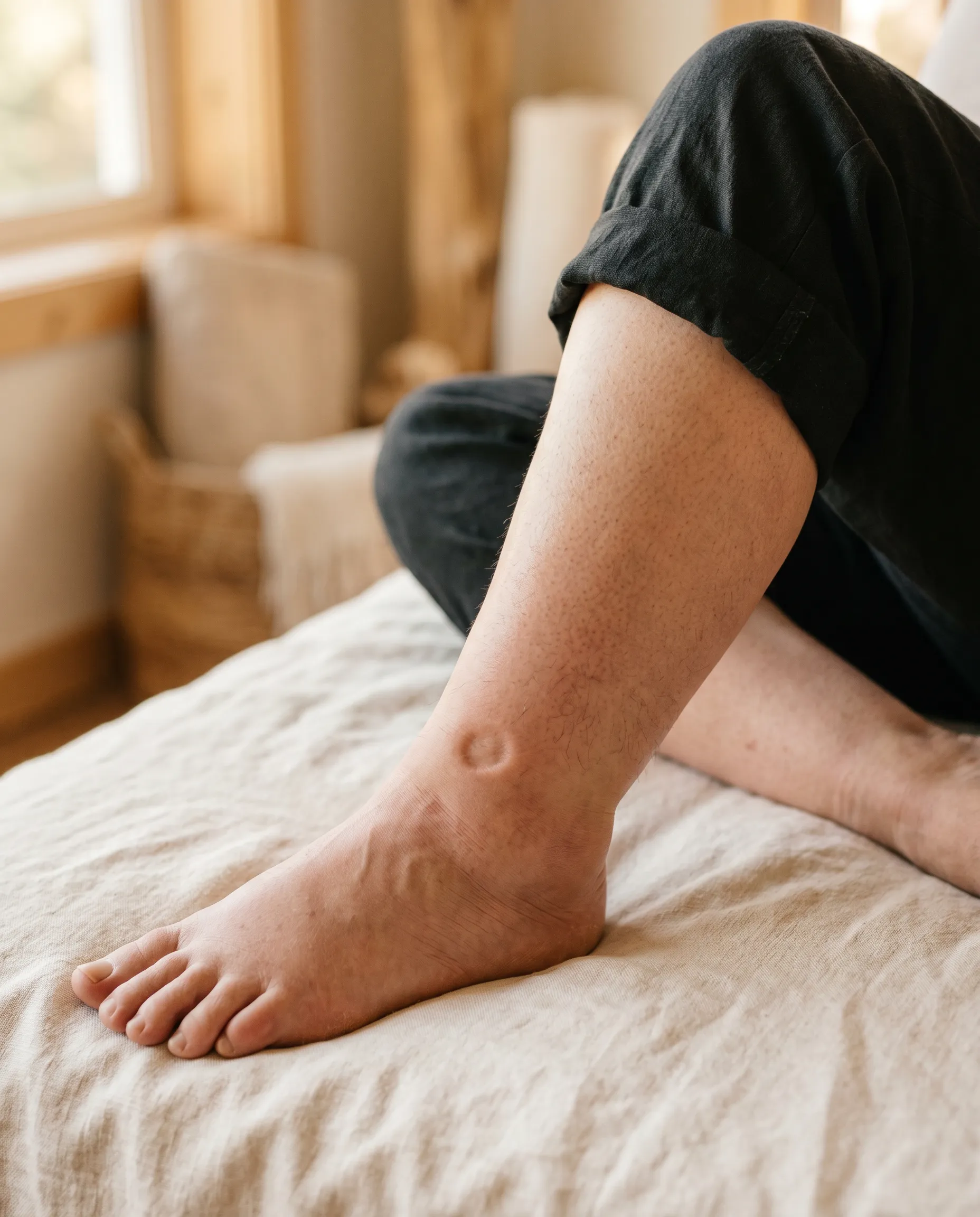
Lymphatic Drainage
Manual Lymphatic Drainage
Assessment-led manual lymphatic drainage by CMTO-registered RMTs, for swelling and complex fluid management. Post-surgical care is with Crystal Tait.
View Manual Lymphatic Drainage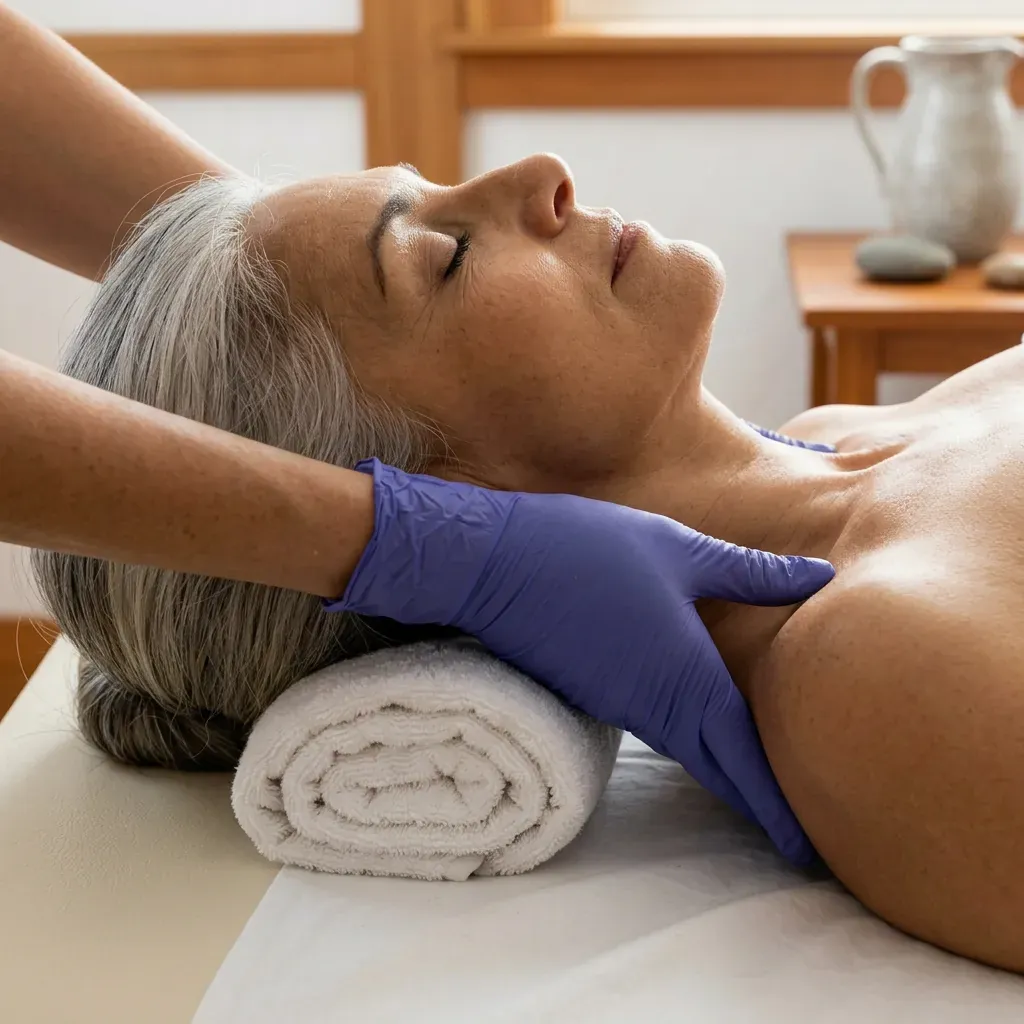
Lymphatic Drainage
LINFA Method
Lymphatic, fascial, and nervous-system work in a single session. Delivered by Crystal Tait, RMT.
View LINFA Method
Lymphatic Drainage
Facial Lymphatic Drainage
Light, directional strokes that move facial fluid toward the drainage nodes in the neck. For puffiness and post-procedure facial swelling.
View Facial Lymphatic Drainage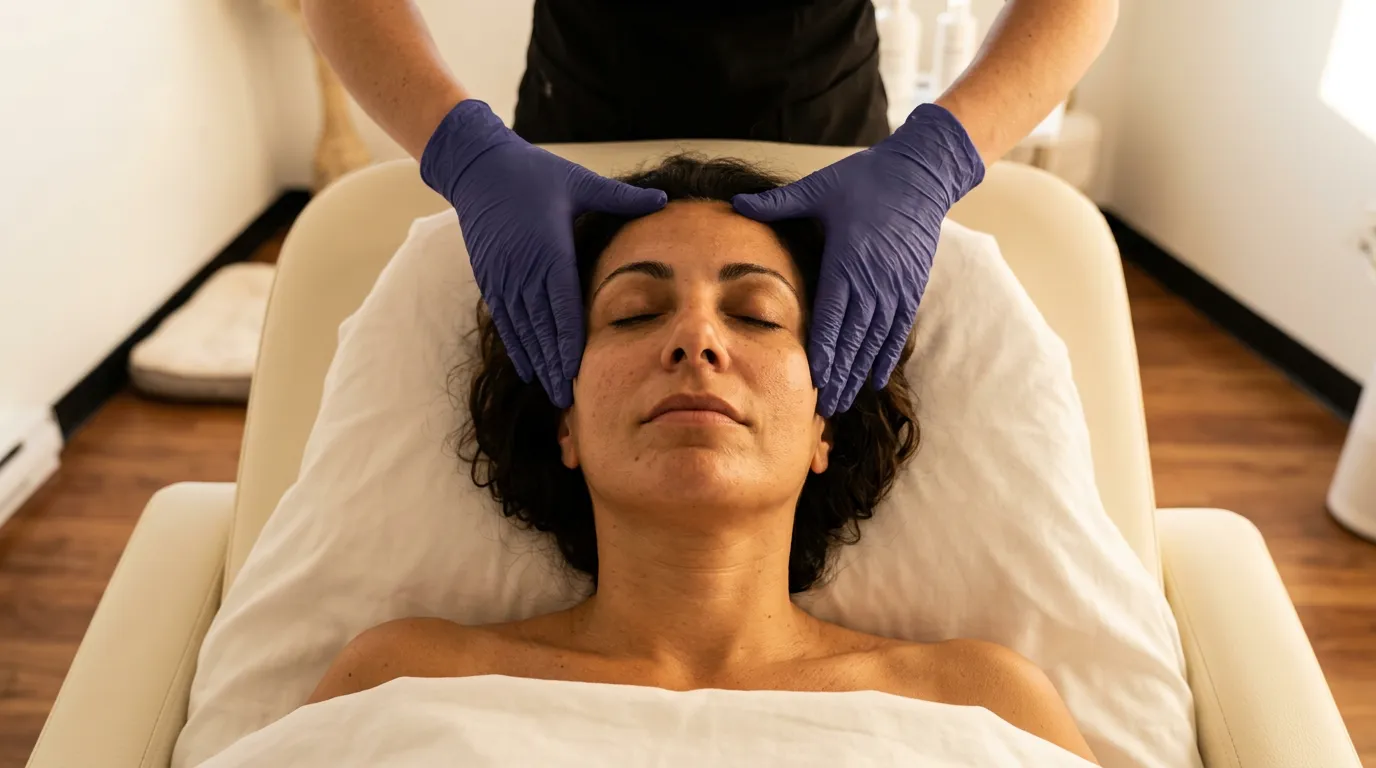
Lymphatic Drainage
Glymphatic Drainage
A 90 minute session that clears the body's lymphatic pathways first, then works the neck, jaw and skull. For brain fog, unrefreshing sleep and head tension.
View Glymphatic Drainage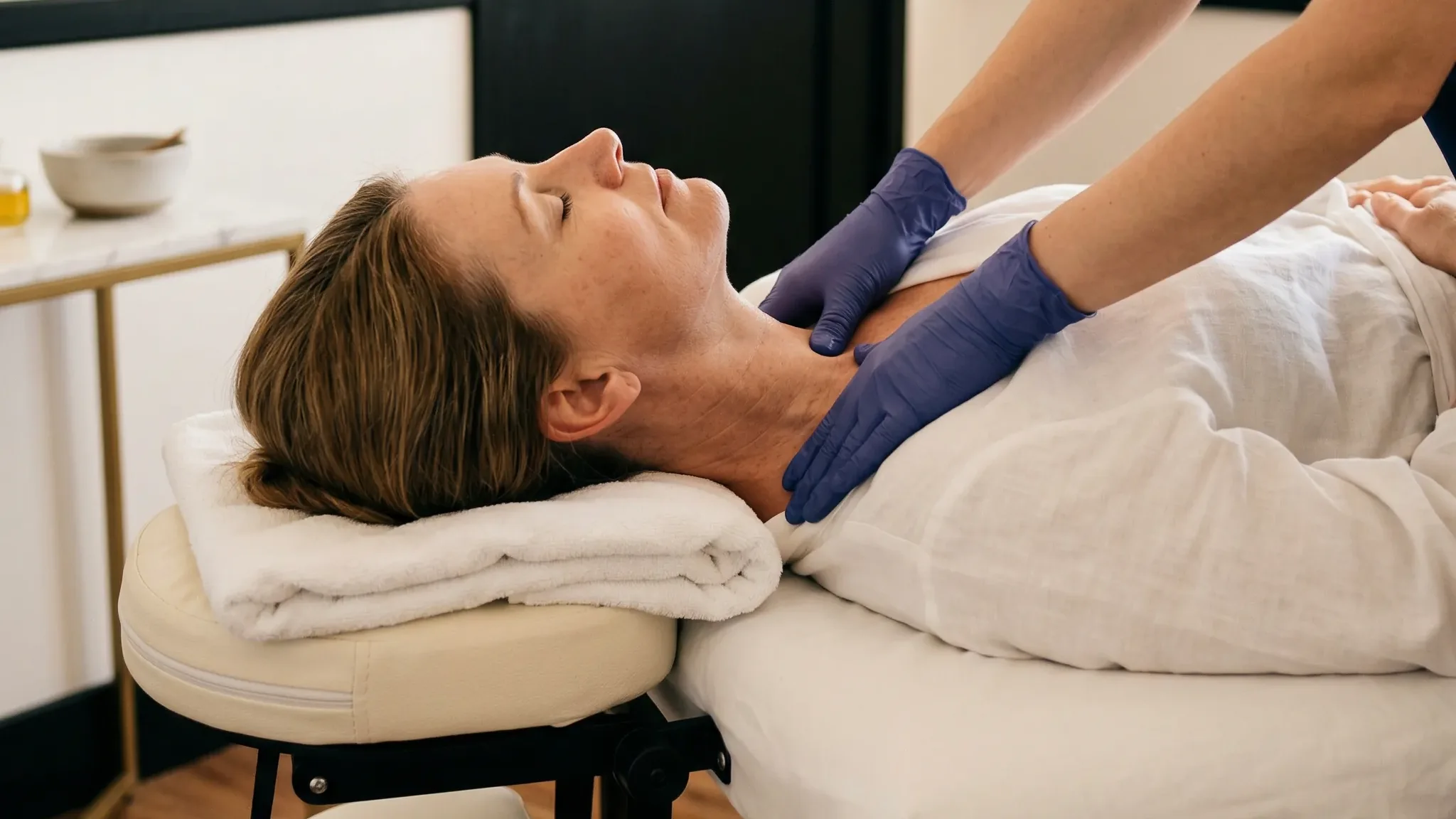
Lymphatic Drainage
Pre-Op Lymphatic Drainage
Drainage booked in the weeks before surgery: a baseline of your tissue, and your post-operative schedule set before you need it.
View Pre-Op Lymphatic Drainage
Treating a specific concern? Read how we assess and treat lymphatic drainage.
Not sure where to start?
Start with what you notice.
You do not need to know which discipline treats your concern. We figure that out on your first visit.
Conditions & Concerns

Pain & Injury
Back Pain
Tap to learn morePain & Injury
Back Pain
Rest helps for a day. Stretching helps for an hour. Four disciplines under one roof assess what is actually driving the pain.

Pain & Injury
Neck Pain & Stiffness
Tap to learn morePain & Injury
Neck Pain & Stiffness
Stiff in the morning, sore by midday. A cervical assessment identifies whether the source is disc, joint, muscle, or nerve before treatment begins.

Pain & Injury
Sciatica
Tap to learn morePain & Injury
Sciatica
Starts in your lower back. Burns down the back of your leg. Sciatica has a specific source, finding it is the first step.
Pain & Injury
Sports Injuries
Tap to learn morePain & Injury
Sports Injuries
Something gave during the game, or an ache built up over weeks. Accurate assessment first, then a plan to get you back to full activity.

Pain & Injury
Muscle Pain & Tension
Tap to learn morePain & Injury
Muscle Pain & Tension
Your shoulders are concrete by 3 PM. The knots never fully release. Tension that keeps returning has an underlying cause, assessment finds it.

Pain & Injury
Headaches & Migraines
Tap to learn morePain & Injury
Headaches & Migraines
Pressure behind your eyes every afternoon. The Advil takes the edge off. Recurring headaches are not something to manage with painkillers indefinitely.
Ready to book fibrosis massage?
Sessions begin once your surgeon clears you. Book directly with Crystal on Jane. You can also call 905-856-2299.
Fibrosis Massage After Surgery: Common Questions
Reviewed by Crystal Tait, RMT — November 10, 2026